How a Rotating-Team Coordinator Keeps Play Fair and Flexible
A rotating-team coordinator helps a changing group agree how teams are reshaped, roles handed over and disputes settled without letting administration take over.
A rotating-team coordinator helps a group reshape sides without letting every change become a debate. In open-format sport, the useful work is not maintaining a queue; it is keeping the group’s agreements clear when numbers, abilities or the shape of a game shift.
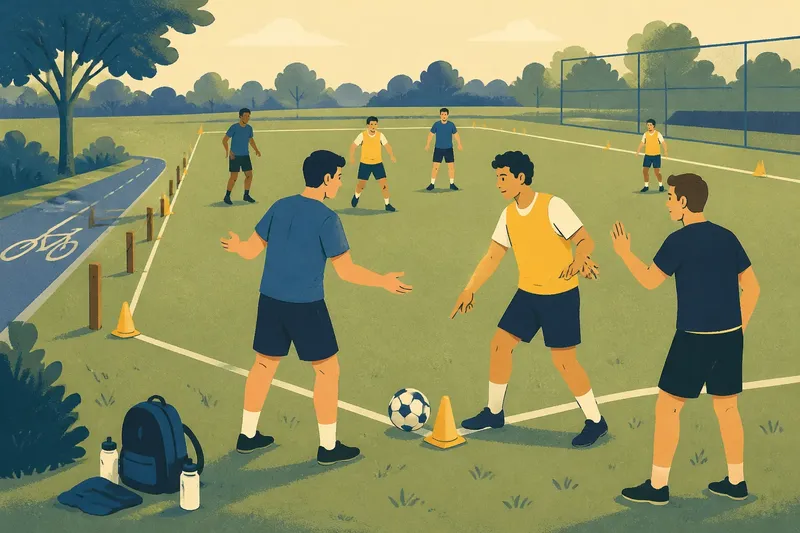
That distinction matters in a football kickabout, a mixed-ability basketball session or a community game with no permanent captains. The coordinator gives the group a way to make decisions, but does not acquire authority to choose who plays or decide who deserves a particular role.
A coordinator makes shared decisions easier
Rotating teams can become uneven for reasons that have nothing to do with anyone’s intentions. A player may be new to the sport, someone may have arrived with a friend, or a side may lose a player and need to change shape. If the group relies on whoever speaks first, the same people can end up setting the terms.
The coordinator can make the decision process explicit: ask what needs to change, offer a fair method the group has already accepted, and check that everyone understands the result. This is different from selecting teams by skill or judging a player’s reasons for wanting a change. The group owns the agreement; the coordinator helps it remain usable.
Keep the decision small enough to settle before play resumes.
Agree how to reshape sides before a dispute arises
Before play, the group can decide what happens when a team loses a player or the numbers do not divide neatly. Options include alternating one player between sides, asking for volunteers to switch, or drawing names when several people are willing. Each method has a trade-off: volunteers are quick but can repeatedly burden the same people; a draw spreads the choice but may not suit every situation.
State any limits that matter to the group. For instance, someone may need a lower-impact role, or a player may prefer not to switch sides mid-game. The coordinator should not ask for private explanations in front of everyone. A simple acknowledgement and an alternative arrangement are usually enough.
- If the teams have unequal numbers, check whether the group has agreed to alternate an extra player; if so, apply that pattern, and if not, pause for a brief group choice.
- If one player is repeatedly asked to switch, check who has carried that change recently; if it is the same person, invite another volunteer or use the agreed neutral method.
- If a player asks for a different role, check whether the requested role is available; if it is, make the change, and if it is not, offer the nearest workable alternative.
- If a newcomer is unsure of the format, check what they have understood; if the arrangement is unclear, explain the current agreement, and if they need more detail, ask a teammate to help before play begins.
- If a proposed change affects safety or an agreed rule, check the group’s existing procedure; if the issue remains uncertain, stop play and ask the appropriate organiser or qualified person rather than improvising.
- If the coordinator needs to return to playing, check that another person has accepted the task; if someone is ready, hand over the current agreement, and if nobody is, ask the group to make the next decision together.
Use a method that fits the group, not a fixed formula
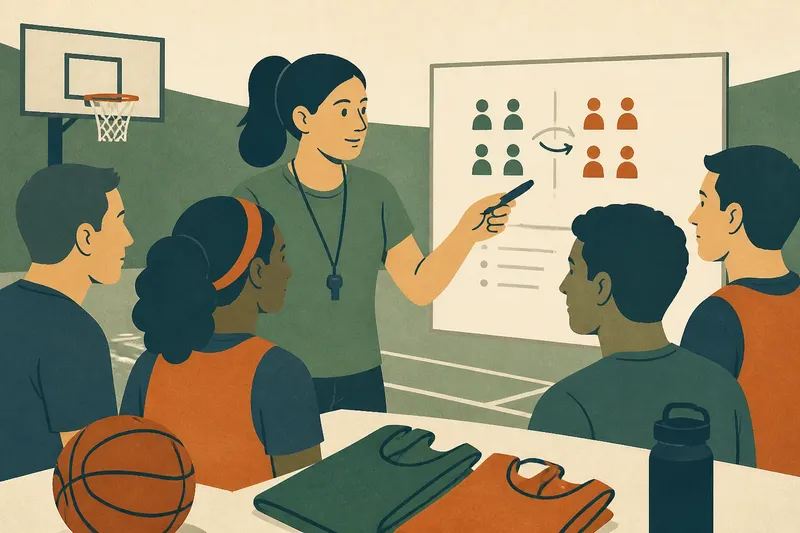
A quick choice can suit a small, familiar group; a more visible method helps when several people are involved. A whiteboard can record team names and any agreed change, while coloured bibs can show sides without relying on memory. Neither tool settles a disagreement by itself. The group still needs to know what the marks mean and who can propose a change.
Imagine a community basketball session with six players, two of whom have just arrived. The group has already agreed that new players join whichever side has fewer people, and that a tie is settled by alternating the next switch. The coordinator counts three players on each side, checks that both newcomers are content to enter together, then asks the group to use its alternating rule; because the previous switch went to the other side, the newcomers join the side due its turn. The resulting teams have four and four, and the group can resume without asking the coordinator to make a personal judgement about who should move.
The example works because the decision rule was agreed beforehand and the observable outcome is clear: both newcomers know their side, and the teams are even. If a player could not take part in the proposed arrangement, the coordinator would return the choice to the group rather than treating the rule as more important than the people playing.
How should the coordinator handle a changed plan?
What if someone objects to a team change?
Pause briefly and ask which part of the agreed method is in question. If the group’s rule covers the situation, restate it and check for a practical constraint; if it does not, let the players agree a temporary solution before continuing.
What if the numbers change during a game?
Use the group’s agreed stopping point rather than interrupting active play, unless continuing would be unsafe. At that point, explain the options plainly and make sure the people affected can respond.
What if a player does not want to switch?
Do not treat refusal as a challenge to the coordinator’s authority. Ask whether the arrangement can be changed through another volunteer or the group’s alternative method, and avoid pressing for personal reasons in public.
What if nobody wants to coordinate?
Keep the role temporary and let the group make decisions together, rather than assigning permanent responsibility by default. A player can offer to facilitate one decision or one game, then pass the task on.
Keep the authority limited and the handover clear
A coordinator should not become an unofficial referee, captain or judge of effort. They can point out the group’s agreement and invite a decision, but disputes about rules belong to the process the players have accepted. A safety concern deserves a pause and, where relevant, advice from a qualified person or the session organiser.
When the coordinator steps away, a useful handover covers only what the next person needs: the current team arrangement, the rule being used for changes, and any unresolved choice. If the handover would take longer than the decision itself, the group may need a simpler agreement.
For a rotating-team coordinator, the most useful measure is whether players can understand how a change was made and what they can do if the arrangement does not fit. A clear method leaves room for people to speak up, while keeping the game’s decisions with the group rather than one person.