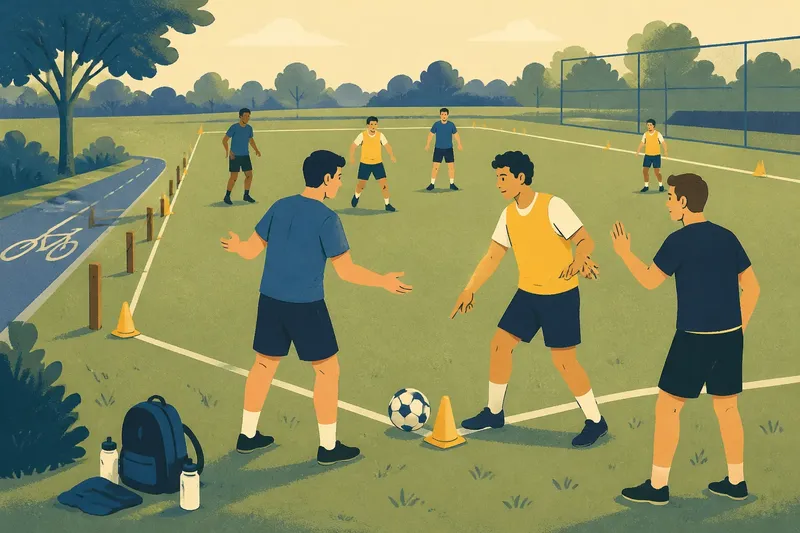
First to a Score or Play Until the Clock Runs Out?
Choose a target-score or fixed-time finish that suits your match, and settle what happens on a tie or at the final signal before play begins.

A target-score or fixed-time finish changes what players must agree before a match begins. Reaching a chosen total makes the score decide when play ends; a timer makes the agreed stopping point decide. The better fit depends on whether the group needs a result tied to scoring or a firm boundary for the session.
That choice is especially useful when a match shares a court, pitch or table with other players. Decide the finish first, then settle what happens at the boundary: whether a final rally carries on, whether a level score stands, and who calls time. Those details make the endpoint easier to apply when the match is close.
A target score lets scoring set the endpoint
With a target score, the match ends when a side reaches the agreed total. Players can see what remains to be done, and the result follows directly from the scoring. The duration, however, depends on how the game unfolds rather than on a fixed stopping time.
This suits a group that can keep playing until the target is reached and wants the finish to depend on the contest. Before starting, clarify whether passing the target in a single play still ends the match. If the rules allow a tie at the target, decide whether that tie stands or play continues until one side leads.
For a shared venue with a firm handover, an open-ended target may not fit. The group could be tempted to stop early or rush the final points, which makes the stated finish harder to honour. Choose a target only when the group can accept that the endpoint may arrive sooner or later than expected.
A fixed time gives the match a clear boundary
A fixed-time finish ends at an agreed signal or clock reading. It suits a session with a scheduled handover because players know which boundary governs the match, even if the score is close when time runs out.
Agree whether play stops at the signal or the current rally, possession or turn is completed. Name the timekeeper, or identify the visible clock everyone will follow. In a noisy venue, settle on a signal players can hear rather than relying on a silent timer.
A timed match can end level, or with a play still under way. Decide whether a draw stands, whether that play is completed, or whether a tie-break applies. If there is a tie-break, specify what ends it; otherwise the supposed boundary may become unclear just when it matters most.
Say a group needs to leave a shared court when another group arrives. They choose a fixed playing period, agree to complete the rally under way when the timer sounds, and accept a draw if the score is level. If the signal comes during a rally, they finish it, record the score and leave the court; the result is a settled finish that respects the handover.
Choose the finish that matches the group’s constraint
Ask what the endpoint needs to do. If players can continue until a scoring goal is reached, a target score makes the result straightforward. If the group must stop at a known point, fixed time makes the boundary straightforward. A combined rule can serve both needs, but it also requires players to agree which ending takes precedence.
- Target score: Check that the group can keep playing until the target is reached; if it can, use the target as the endpoint, and if it cannot, choose fixed time instead.
- Fixed time: Check whether the venue or session has a firm stopping boundary; if it does, use a timer and name the timekeeper, and if it does not, consider whether a target score better suits the match.
- Combined finish: Check whether both a time boundary and a scoring goal matter; if both do, state which comes first and how a tie is settled, and if only one matters, use that single finish to keep the rule easier to remember.
Keep the finish separate from decisions about who plays on each side. The endpoint answers when the match ends; it does not resolve how teams are formed or how players share turns.
Settle the final-play details before they matter
A short agreement is enough if it answers the questions players will need to apply at the endpoint. Use the game’s ordinary scoring and stopping conventions where they fit, and state any departure plainly.
- Endpoint wording: Check that everyone can repeat the finish as “first to the agreed target” or “stop at the timer”; if they can, begin, and if not, restate it in simpler terms.
- Target handling: Check whether one play can pass the target; if it can, decide whether passing still ends the match, and if it cannot, use the game’s ordinary scoring rule without adding an unnecessary exception.
- Final play: Check whether a rally, possession or turn may be active at the signal; if it may, agree to finish it or stop immediately, and if it will not arise under the chosen format, keep the rule focused on the endpoint.
- Ties: Check whether the score can be level at the finish; if it can, agree that the draw stands or define a tie-break, and if it cannot, follow the game’s scoring rules.
- Timekeeping: Check whether everyone can hear or see the signal; if they can, use that shared cue, and if they cannot, name a timekeeper to call the end clearly.
- Interruptions: Check whether a venue pause, lost ball or injury could interrupt timed play; if the group wants the clock paused, name who calls the pause, and if it does not, agree that time continues.
If a dispute arises, return to the agreement rather than changing the finish to suit the score. If the group has not agreed on an edge case, pause briefly and choose a rule that everyone can apply consistently for the rest of the match.
A clear endpoint cannot settle every question of fairness
A target score does not necessarily take longer, and a timed match does not necessarily feel more balanced. Scoring pace affects a target match; an unclear final-play rule affects a timed one. The format answers when the match ends, not whether the sides are evenly matched or how participation is shared.
Imagine a group has one court slot, a timer, and a score that could finish level. They decide the clock governs, complete the rally under way at the signal, and let a draw stand. If the timer sounds during a rally, they finish that rally and compare the resulting score; if it is level, they stop without a tie-break. The choice favours a predictable handover over producing a winner, so everyone knows what the result means before play starts.
For a shared court, a useful rule might be: “The timer ends the match; finish the current rally; a level score is a draw.” Keep the wording short enough to repeat without checking a list.
Which finish details do players often ask about?
Does a target score have to be reached exactly?
Agree whether a play can carry the score past the target and whether that still ends the match. Follow the game’s normal scoring method unless everyone clearly chooses a different rule.
What happens when the timer sounds during play?
Choose whether play stops at once or the active rally, possession or turn finishes. Say the choice before the match begins so players do not have to infer it at the signal.
Should a tied score produce a draw?
A draw can be a simple fit when the group needs to stop on time. If players prefer a winner, agree on a tie-break and its endpoint in advance.
Who decides when the clock starts or stops?
Name one timekeeper or identify a shared clock as authoritative. For a target-score match, agree who confirms the score and how a disputed point is settled before play resumes.
The best target-score or fixed-time finish is one the group can apply without reopening the rules at the final moment. State the endpoint, the treatment of the last play and the tie rule together; that leaves players with a clear result and a usable handover.